
Introduction
In today’s digital-first world, your website is often the very first interaction potential customers have with your brand. Whether you are a small business owner, an entrepreneur, or a digital marketing professional, the importance of an engaging and functional website cannot be overstated. A well-designed website not only captures attention but also builds trust, increases conversions, and establishes a lasting online presence.
In this ultimate guide, we’ll explore everything you need to know about website design and development, its connection with digital marketing strategies, and how you can leverage modern trends to create a website that truly works for your business.
1. Why Website Design and Development Matter
1.1 The Digital Storefront
Think of your website as the online equivalent of your store or office. A professional, well-organized, and easy-to-navigate website creates a strong first impression that can significantly impact customer trust.
1.2 Credibility and Trust Building
Studies show that over 75% of users judge a company’s credibility based on its website design. Outdated layouts, broken links, or slow loading times can lead visitors to bounce instantly, making them less likely to engage with your services.
1.3 Driving Conversions and Leads
A good website doesn’t just look pretty—it also acts as a lead-generation machine. Effective design elements such as clear call-to-actions (CTAs), simple forms, and seamless navigation can increase conversion rates dramatically.
2. The Connection Between Website Design and Digital Marketing
2.1 SEO and Web Design
Search engine optimization (SEO) goes hand in hand with web development. Google favors websites that are mobile-friendly, fast-loading, and structured with proper headings and content. Without these, even the best marketing campaigns will fall flat.
2.2 User Experience (UX) and Engagement
Digital marketing thrives on user engagement, and engagement is driven by design. From intuitive menus to engaging visuals, every design choice impacts how long a user stays on your site and whether they convert into customers.
2.3 Branding Consistency
Your website should align perfectly with your brand voice, tone, and marketing campaigns. Whether it’s email marketing, social media, or paid ads, consistent branding across platforms ensures a stronger recall value.
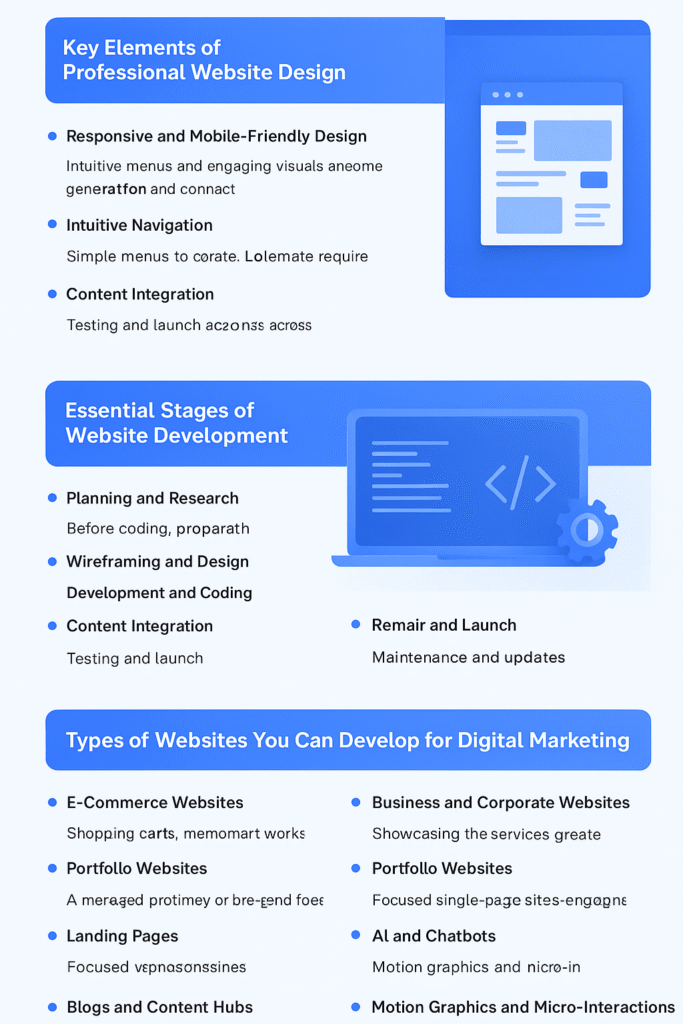
3. Key Elements of Professional Website Design
3.1 Responsive and Mobile-Friendly Design
With more than 60% of web traffic coming from mobile devices, a responsive design that adjusts across screen sizes is no longer optional—it’s essential.
3.2 Intuitive Navigation
Visitors should find what they’re looking for in three clicks or less. Clear menus, search functionality, and logical page hierarchy improve user experience.
3.3 Visual Aesthetics and Branding
Colors, fonts, and imagery should reflect your brand identity. For instance, a law firm may prefer neutral, professional tones, while a creative agency may use bold and vibrant palettes.
3.4 Speed and Performance
Every second counts. Studies show that a 1-second delay in page load can reduce conversions by 7%. Optimizing images, using caching, and implementing fast hosting solutions are critical.
3.5 Security Features
In an era of increasing cyber threats, websites must be protected with SSL certificates, secure hosting, and regular updates to build user trust.
4. Essential Stages of Website Development
4.1 Planning and Research
Before coding, it’s important to define your goals, target audience, and competitors. This stage sets the foundation for the entire project.
4.2 Wireframing and Design
Wireframes are like blueprints. They provide a structural outline of your website before adding visuals and functionality.
4.3 Development and Coding
Using technologies such as HTML, CSS, JavaScript, and frameworks like React or WordPress, developers bring the design to life.
4.4 Content Integration
High-quality content—including text, images, and videos—should be added to make your website engaging and informative.
4.5 Testing and Launch
Before going live, testing ensures that everything works flawlessly across devices and browsers.
4.6 Maintenance and Updates
A website is not a one-time project. Continuous updates, bug fixes, and content refreshes are vital for long-term success.
5. Types of Websites You Can Develop for Digital Marketing
5.1 E-Commerce Websites
Perfect for businesses that sell products online. Features include shopping carts, secure checkout, and inventory management.
5.2 Business and Corporate Websites
These act as the digital face of your company, showcasing services, team members, and achievements.
5.3 Portfolio Websites
Ideal for creative professionals like designers, photographers, and writers to showcase their work.
5.4 Landing Pages
Focused, single-page sites designed for specific marketing campaigns or product launches.
5.5 Blogs and Content Hubs
Blogs drive SEO, improve engagement, and establish you as an industry expert.
6. Modern Trends in Website Design and Development
6.1 Dark Mode Designs
Many brands now offer dark mode for a sleek, modern experience that reduces eye strain.
6.2 Minimalism and Clean Layouts
Less clutter, more focus. Clean websites improve user engagement and conversions.
6.3 Voice Search Optimization
With the rise of smart assistants, websites optimized for voice queries are gaining importance.
6.4 AI and Chatbots
Chatbots can provide instant responses, improving customer experience while reducing support costs.
6.5 Motion Graphics and Micro-Interactions
Animations and subtle interactions make websites more engaging and modern.
7. How to Choose the Right Web Design and Development Partner
7.1 Check Their Portfolio
A strong portfolio gives you an idea of the agency’s style, capabilities, and experience.
7.2 Evaluate Communication
Good communication ensures your vision aligns with the final product.
7.3 Consider Pricing and Packages
Compare costs, but never compromise quality for a lower price.
7.4 Look for Ongoing Support
A reliable partner should provide long-term support for updates, maintenance, and scaling.
8. Mistakes to Avoid in Website Design and Development
- Overloading with too many elements
- Ignoring mobile optimization
- Using generic stock photos excessively
- Forgetting SEO fundamentals
- Neglecting regular updates and maintenance
9. The Future of Website Design and Development
The next decade will bring more AI-driven personalization, immersive AR/VR experiences, and even faster development technologies. Websites will become smarter, more adaptive, and highly interactive to meet evolving customer needs.
Conclusion
Your website is the heart of your digital marketing strategy. A well-designed and professionally developed website not only attracts visitors but also turns them into loyal customers. By focusing on user experience, SEO, responsiveness, and modern trends, you can build a digital presence that stands the test of time.
Whether you’re building an e-commerce platform, a portfolio site, or a business landing page, investing in website design and development is one of the smartest decisions you can make for long-term success.